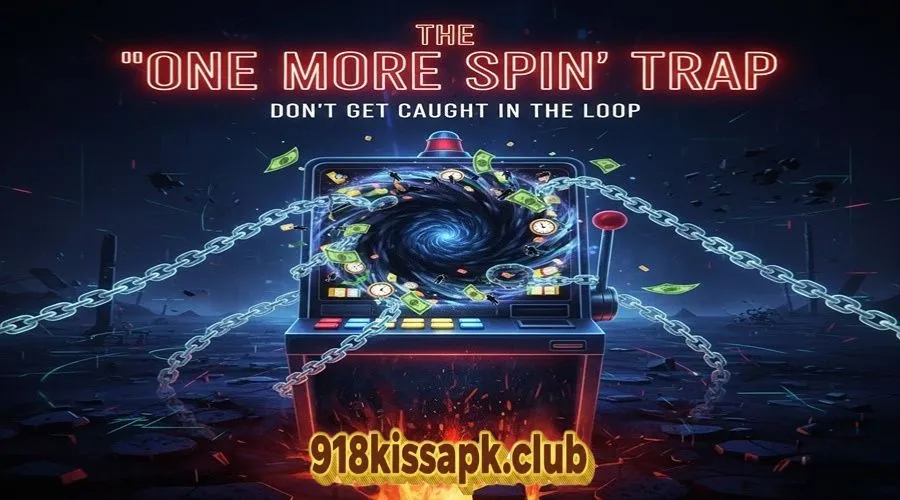
Understanding the "One More Spin" Trap: Psychology and Prevention
The allure of digital gaming is often found in its rhythm—the flashing lights, the rhythmic sounds, and the anticipation of a big win. However, within this excitement lies a psychological phenomenon known as the "One More Spin" trap. This cognitive loop can turn a casual hobby into an impulsive habit if not managed with awareness. As we navigate the digital landscape in 2026, understanding how to balance entertainment with safety is more critical than ever. Whether you choose to MEGA888 for a quick session or explore other high-energy platforms, the key to a positive experience is recognizing when the fun stops and the compulsion begins.
The Psychology of "Near Misses" and Variable Rewards
At the heart of the "One More Spin" trap is a psychological concept called the "near-miss effect." In many games, seeing two matching symbols followed by a third that just barely misses the line creates a specific chemical reaction in the brain. Paradoxically, the brain processes a near miss similarly to a win, triggering a surge of dopamine that encourages the player to try again immediately. This creates a sense of "I’m getting closer," even though every spin in a modern digital environment is governed by a Random Number Generator (RNG), making each event entirely independent of the last.
Another contributing factor is the schedule of "Variable Ratio Reinforcement." This is the same principle that makes social media scrolling so addictive. Because players do not know exactly when the next win will occur, the brain stays in a heightened state of alertness. In 2026, developers have mastered the art of "Juice"—the sensory feedback of sparkles, chimes, and haptic vibrations—that makes even small, insignificant wins feel like major milestones, further enticing the player to stay for just one more round.
Recognizing Addictive Patterns: The Red Flags
Safe play starts with self-awareness. Recognizing the transition from entertainment to a trap requires honesty about one's behavioral patterns. One of the first signs of the "One More Spin" trap is time distortion. If a planned 15-minute session turns into two hours without a clear memory of the time passing, the player has likely entered a "flow state" that is no longer productive or healthy.
Another red flag is "chasing losses." This occurs when a player believes that a winning streak is "due" because they have lost several rounds in a row. In reality, the mathematics of digital platforms ensure that previous outcomes have zero impact on future results. If you find yourself thinking, "I just need to win back what I started with," it is a clear signal to step away. Furthermore, if the impulse to download mega888 or log into a platform arises during moments of stress, loneliness, or boredom as a primary coping mechanism, it indicates that the game is being used for emotional regulation rather than pure entertainment.
Strategies for Safe and Responsible Play
To enjoy the thrill of gaming without falling into the trap, players must implement structural boundaries. In 2026, most reputable platforms offer built-in tools to assist with this, but personal discipline remains the most effective defense.
1. Set Hard Financial Limits: Before starting, decide on a fixed amount of money that you are comfortable losing—consider it the "price of admission" for the entertainment. Once that amount is gone, the session must end. Never use money intended for essentials like rent or groceries.
2. Use a Timer: Because digital environments are designed to be timeless, an external alarm is vital. Setting a physical timer on your phone or watch provides a "reality check" that breaks the immersion and allows you to reassess your state of mind.
3. The 24-Hour Rule: If you feel an intense urge to continue playing after a loss, commit to a 24-hour break. This cooling-off period allows your dopamine levels to reset and your logical brain to take back control from your impulsive side.
4. Physical Awareness: Pay attention to your body. Tension in the shoulders, a racing heart, or clenching your jaw are physical manifestations of the stress caused by the "One More Spin" trap. Taking deep breaths and physically standing up to stretch can break the cognitive loop.
The Role of Technology in Player Protection
As technology evolves, so do the safeguards. In 2026, AI-driven player protection is becoming standard. These systems analyze betting patterns and can send real-time "nudges" or reminders to players who show signs of impulsive behavior. When you download mega888 or similar updated apps, you may notice features that allow you to set daily, weekly, or monthly deposit limits. These are not restrictions on your fun; they are safety nets designed to ensure the longevity of your hobby.
The industry is also moving toward greater transparency regarding "Return to Player" (RTP) percentages. Understanding that the house always has a mathematical edge is the best way to maintain a realistic perspective. If you view gaming as a form of paid entertainment—similar to buying a movie ticket—rather than a way to make money, the psychological grip of the "One More Spin" trap loses its power.
Conclusion: Keeping the Fun in the Game
Digital gaming should be a source of joy and a way to unwind. By understanding the psychological triggers like near misses and dopamine loops, you can navigate these platforms with confidence. The "One More Spin" trap is only effective when the player is unaware of its existence. By setting limits, recognizing red flags, and utilizing the safety tools provided by modern apps, you can ensure that your experience remains safe, controlled, and, most importantly, fun.
 WhatsApp